Last updated: July 2026.
If you fear arrest in a non-bailable case, anticipatory bail is your pre-arrest protection — and the first question is usually how much it costs. This guide breaks down honest 2026 anticipatory bail costs in India: lawyer fees for Sessions Court and High Court, court charges, the process, and how to keep the total in check.
Quick answer: Most anticipatory bail matters in a Sessions Court cost ₹25,000–₹75,000 in lawyer fees; a High Court matter runs ₹75,000–₹2,00,000+, and senior advocates charge well above that. Court and statutory charges are small (₹500–₹2,000). Total for a typical sessions-court case: around ₹25,000–₹60,000.
What is anticipatory bail? (2026 law)
Anticipatory bail is a court direction that, if you’re arrested for a non-bailable offence, you’ll be released on bail. Since 1 July 2024 it is governed by Section 482 of the Bharatiya Nagarik Suraksha Sanhita (BNSS), 2023 — which replaced the old Section 438 CrPC. Only the Court of Session and the High Court can grant it.
Regular bail vs anticipatory bail — the difference
The two are often confused, and it affects your cost. Anticipatory bail (Section 482 BNSS) is pre-arrest protection — you apply before arrest, when you fear being taken into custody in a non-bailable case. Regular bail is sought after arrest, to secure release from custody. Anticipatory bail is filed in the Court of Session or High Court and, because it is argued before any arrest, often carries an urgency premium. Knowing which one you actually need is the first thing a criminal lawyer will establish in your consultation.
Anticipatory bail lawyer fees in India (2026)
| Item | Typical cost |
|---|---|
| Initial consultation | ₹1,000 – ₹5,000 |
| Sessions Court application (lawyer fee) | ₹25,000 – ₹75,000 |
| High Court application (lawyer fee) | ₹75,000 – ₹2,00,000+ |
| Per-appearance / hearing | ₹5,000 – ₹50,000 |
| Court & statutory charges | ₹500 – ₹2,000 |
Fees depend heavily on the seniority of the advocate and the gravity of the allegation — a senior High Court counsel in a serious matter can charge several lakhs, while a routine sessions-court application is far more modest.
What goes into the total cost
- Consultation — the lawyer reviews the FIR, facts and strategy.
- Drafting & filing — the anticipatory bail application and supporting affidavits.
- Appearances — one or more hearings; some lawyers charge a lump-sum, others per appearance.
- Documentation — certified copies of the FIR, bail bonds and surety paperwork.
What affects the cost most
- Court level — High Court costs more than Sessions Court.
- Advocate’s seniority and reputation.
- Seriousness and urgency of the allegation.
- Number of hearings before the order is granted.
Documents you’ll need for an anticipatory bail application
Have these ready to keep the application moving, and billable time down:
- A copy of the FIR, or details of the apprehended complaint
- Your identity and address proof
- Any documents supporting your version of events
- Details of prior cases or antecedents, if relevant
- Contact details of a proposed surety
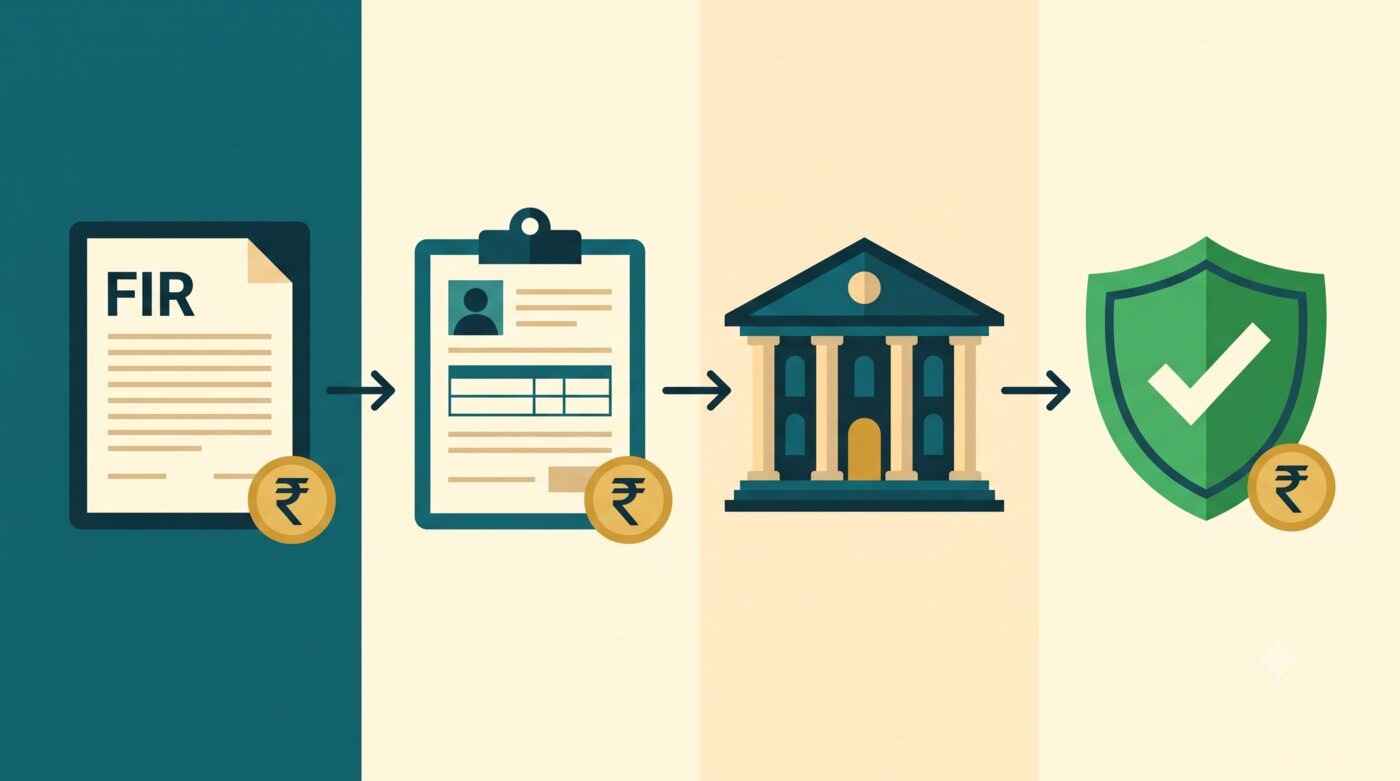
The process, in brief
- Consult a criminal lawyer to assess the FIR and risk of arrest.
- The lawyer drafts and files the application under Section 482 BNSS in the Sessions Court (or High Court).
- The court issues notice to the Public Prosecutor and hears both sides.
- If granted, the court sets conditions (cooperating with investigation, not leaving the country, etc.).
Anticipatory bail orders passed earlier under CrPC continue to operate; new applications are filed under Section 482 BNSS.
How to keep costs down
- Act early — a well-prepared application at the Sessions Court is cheaper than an urgent High Court rush.
- Agree the fee in writing — lump-sum vs per-appearance, with inclusions clear.
- Bring documents ready — FIR copy, IDs, relevant evidence — to cut billable time.
- Choose a verified criminal specialist — the right lawyer at the right court level saves money.
A real example: what an anticipatory bail case costs
For a routine anticipatory bail matter argued in a Sessions Court:
- Consultation: ₹3,000
- Drafting, filing and appearances (lawyer fee): ₹40,000
- Court and statutory charges: ₹1,500
Total ≈ ₹44,500. The same matter taken to the High Court, or handled by a senior advocate in a serious case, can run to several lakhs — court level and advocate seniority are the biggest cost drivers.
Find a verified criminal lawyer
LexiZ.ai lets you compare verified criminal lawyers with transparent profiles, real reviews and clear fee expectations — and book a consultation quickly, which matters when arrest is a real risk.
👉 Book a consultation with a verified criminal lawyer and get an honest cost estimate for your case.
Frequently Asked Questions
How much does anticipatory bail cost in India?
A Sessions Court application typically costs ₹25,000–₹75,000 in lawyer fees; a High Court application ₹75,000–₹2,00,000 or more. Court charges are small (₹500–₹2,000).
Which law governs anticipatory bail now?
Section 482 of the BNSS, 2023, in force since 1 July 2024. It replaced Section 438 of the CrPC.
Which courts can grant anticipatory bail?
Only the Court of Session and the High Court.
Why do lawyer fees vary so much?
They depend on the court level, the advocate’s seniority, and the seriousness and urgency of the allegation. Senior High Court counsel charge far more than a routine sessions-court application.
How long does anticipatory bail take?
It varies with urgency and court schedule — sometimes a few days for an urgent hearing, longer where notice and multiple hearings are involved.
Can I reduce the cost?
Act early, agree a written fee, keep documents ready, and choose a verified criminal specialist at the right court level.
Can I apply for anticipatory bail before an FIR is filed?
Yes — you can apply when you have a reasonable, specific apprehension of arrest in a non-bailable offence, even before an FIR is registered. Your lawyer will assess whether the timing is right.
Does anticipatory bail last forever?
It typically protects you in relation to the specific matter, subject to the conditions the court sets (cooperating with the investigation, not leaving the country, and so on). Your advocate will explain the scope and duration for your case.
Disclaimer: This article is for general information only and is not legal advice. Fees are indicative for 2026 and vary by case. For advice specific to your situation, consult a qualified criminal lawyer.